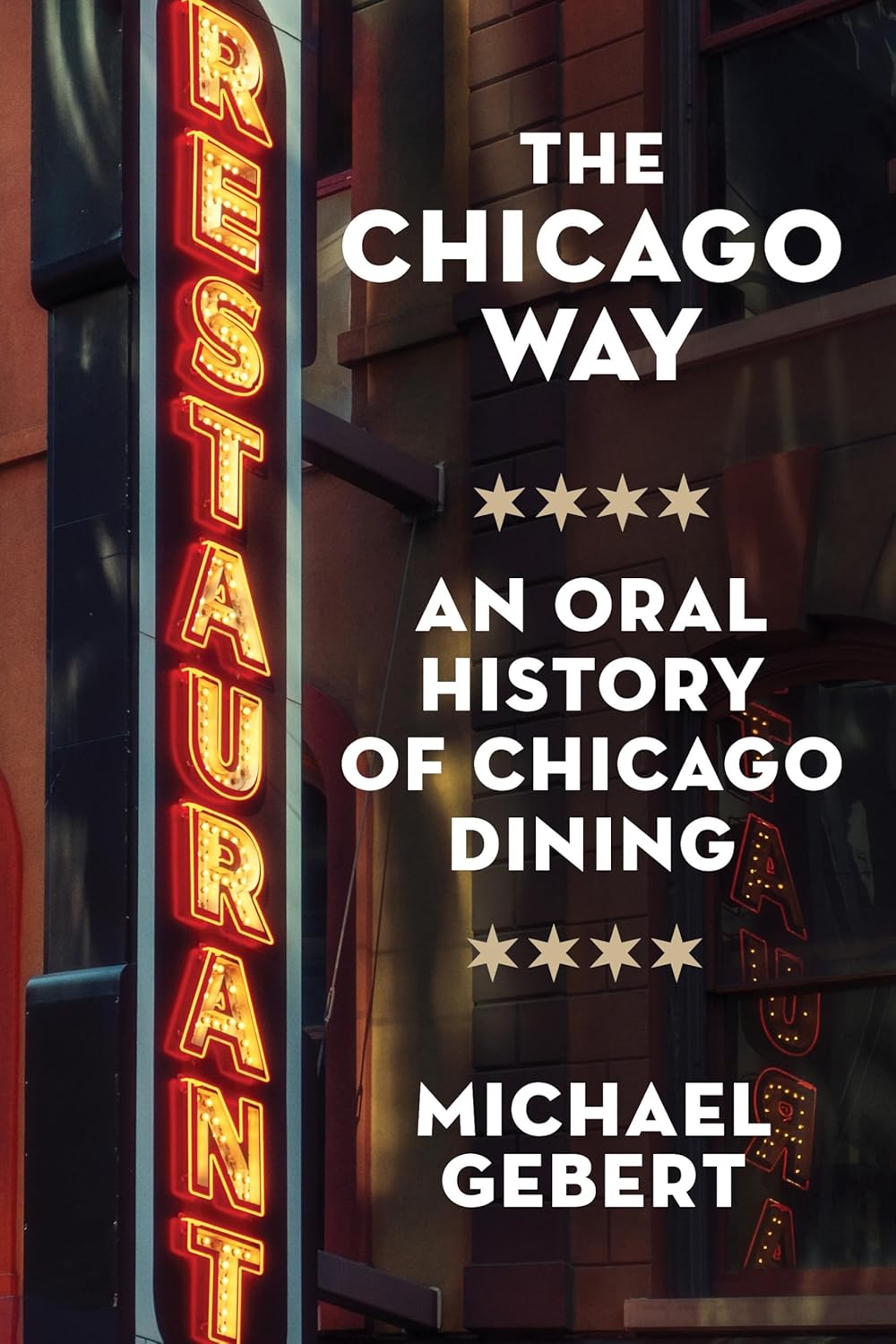
THE CHICAGO WAYAn Oral History of Chicago DiningBy Michael GebertAgate978-1-572-84360-8588pp/$36.00/February 2026 |
|
Reviewed by Steven H Silver
The subtitle of Michael Gebert's The Chicago Way is An Oral History of Chicago Dining. The last word of that subtitle may be the most important word, because it indicates the focus of Gebert's reporting. He isn't interested in such Chicago staples as hot dogs, pizza, or Italian beefs. Instead, he is looking at the find dining experience. Gebert interviews numerous chefs, line cooks, waiters, and backers to give a picture of the Chicago fine dining experience throughout much of the twentieth and twenty-first centuries.His method of exploring Chicago's culinary history provides an organic look. Restaurants don't just spring up out of whole cloth. They evolve from earlier restaurants. Jovan Trboyevic founded first Jovan (1967-1986), then Le Perroquet (1973-1991), and finally Les Nomades (1987-2025). However, Trboyevic's influence is not limited to those three restaurants. Chefs who started out working for him went on to create their own restaurants, both in Chicago and outside Chicago. The book is almost a genealogy of Chicago's restaurants, showing which ones led to each other. Each chapter takes a look at a different chef, restaurants, or hospitality group.
Gebert organizes the restaurants he discusses by type, which means there are times the chronology of the events and growth he describes is not always clear (although he does provide an appendix with the dates most of the restaurants were/are open). This also means that the reader is repeatedly reading that "there are no fine dining restaurants until xx comes along." Each restaurant seems to single handedly introduce fine dining into the Chicago scene, although once Charlie Trotter's is established, this becomes less common in the book as subsequent restaurants (notably Alinea) are a reaction to Charlie Trotter's. The importance of Charlie Trotter's can not be emphasized enough as the number of chef who worked for Charlie Trotter's is staggering, and many created their own restaurants, often to attempt to correct some of the weaknesses exhibited by Charlie Trotter's. The culture of the kitchen there, as depicted in the various interviews, is one of a toxic workplace. The chefs who defend it with rightful pride of having worked there, often sound like a victim of abuse excusing their abuser because of the positives they gained from the experience.
There is often a lacking of context in Gebert's descriptions. He assumes the reader will understand the terms used by those who have been interviewed, and, while most terms can be gleaned from context or repetition, occasionally it would be nice to have an actual definition, to make sure the reader or diner has a better understanding of the way the restaurants being described function. This would also allow the book to more deeply delve into the differences between the service one could expect from Le Francais or Tru.
The biggest drawback of Gebert's book is that so many of the places his interview subjects discuss are no longer open, highlighting the essentially fleeting existence of even the finest and best reviewed restaurants. A replica of Chez Paul may have been immortalized in The Blues Brothers and Ferris Bueller's Day Off, but those are the only places to still experience it. The descriptions of Heaven on Seven or Hot Doug's may make the reader's mouth water, but their food is no longer available. While the book covers many of the closings, it fails to discuss the popular response to the announced closing of Lettuce Entertain You’s first restaurant, R.J. Grunt’s which led to it being one of the restaurants discussed where readers can still go to eat.
Gebert portrays a vibrant restaurant scene that seems to run in parallel to the traditional Chicago steakhouses, pizza restaurants, and hot dog stands. His interviewees' description of restaurants paint a picture of interesting and well-decorated restaurants with distinct personalities. The various stories they have to tell offer a variety of views of individual restaurants, chefs, and even Chicago as a whole, talking about the city's various neighborhoods as they show the influence of new restaurants, which are a driving force in urban renewal.
| Purchase this book |
|
|
|
Hardcover |
Kindle |